No fixed method, but a carefully considered approach
I work with a wide range of proven methodologies and select, for each programme, what suits you best and addresses the specific issues at hand. Sometimes this involves a profile that highlights blind spots, sometimes an approach that uncovers the obstacles holding you back, and sometimes work on the dynamics within a team.
Whatever the method, the aim remains the same: to quickly identify patterns and translate them into lasting behavioural change.


Co-Active Coaching®
In Co-Active coaching, the coach and the client work together in an equal partnership. The shared goal is the client’s professional and personal development, with the client’s questions, aspirations and goals taking centre stage. Co-Active is about being and doing: who you are, who you want to be, and how you act in line with that when you take action. And conversely, how you behave also shapes who you are. These aspects are inextricably linked and therefore work both ways.
The four cornerstones of the Co-Active model
The client is, by nature, creative, resourceful and whole. The client is therefore neither broken nor dependent and usually already holds the answers to their questions within themselves, albeit implicitly; they are simply not yet aware of them.
Both the professional and personal questions and goals that the client has and wishes to achieve form part of the coaching process. People bring themselves and their ‘personal baggage’ to work, and these cannot be viewed in isolation from one another. Co-Active coaching emphasises the client’s development as a whole, rather than simply resolving the current problem.
People looking for a coach want to make a change in their lives. This could mean gaining greater clarity, taking that first step, or setting out in a new direction. Leaving behind the familiar can be daunting. Coaching invites you to step outside your comfort zone. And, with the coach by your side, to take that first step in a safe environment.
A coaching session takes place in the here and now; it is a powerful and dynamic exchange of words, wisdom and information on various levels (e.g. reason, emotion, intuition). Whatever is currently relevant and on the client’s mind, and whatever emerges during the session, is worth exploring or working with, so that it helps the client move closer to their goals.
Leadership Circle Profile®
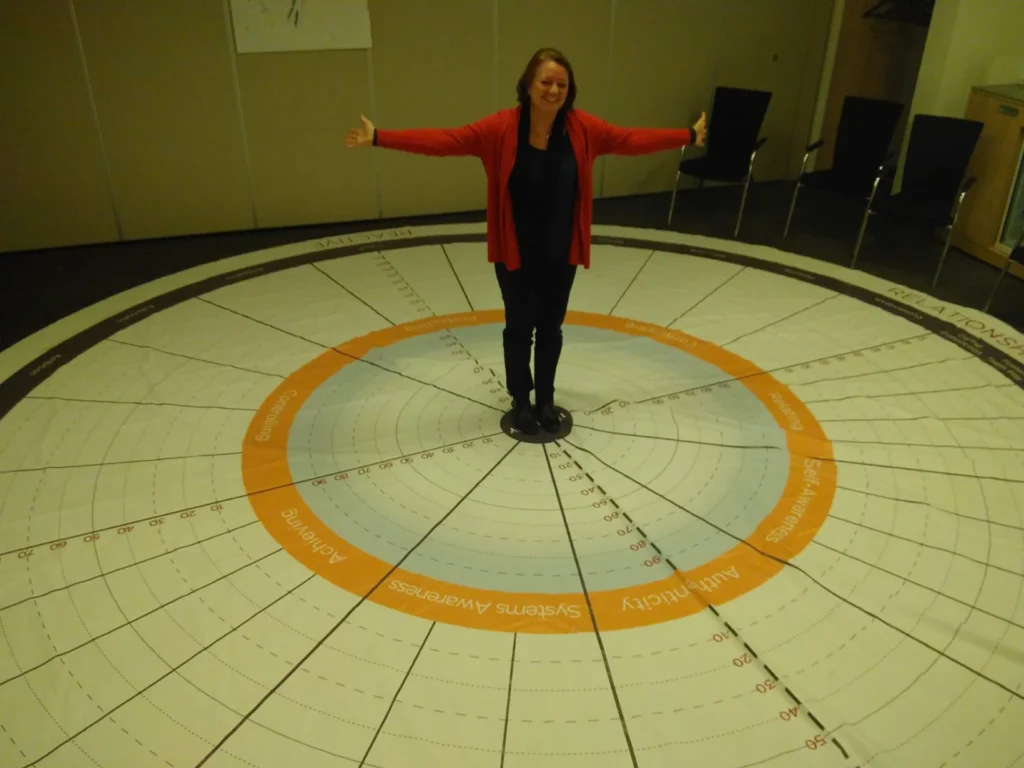
The Leadership Circle Profile (LCP) reveals how you lead and the impact you have on those around you.
You’ll receive honest feedback from your colleagues, staff and managers. We compare this feedback with how you see yourself. This creates a clear and honest picture of your leadership style.
The profile highlights your existing strengths and areas where you can still grow. You can use this as a guide. Based on the profile and feedback, you’ll set to work on the goals you wish to achieve, using a development plan to scale up your leadership.
Organisations worldwide use this tool to develop leaders and managers who make a real difference, both for themselves and for their teams. It is one of the most widely used and highly regarded leadership development tools in the world, and is based on a universal leadership framework.
Collective Leadership Assessment (CLA)
How effective is the leadership within your management team or organisation? And what impact does that collective leadership have on your organisation?
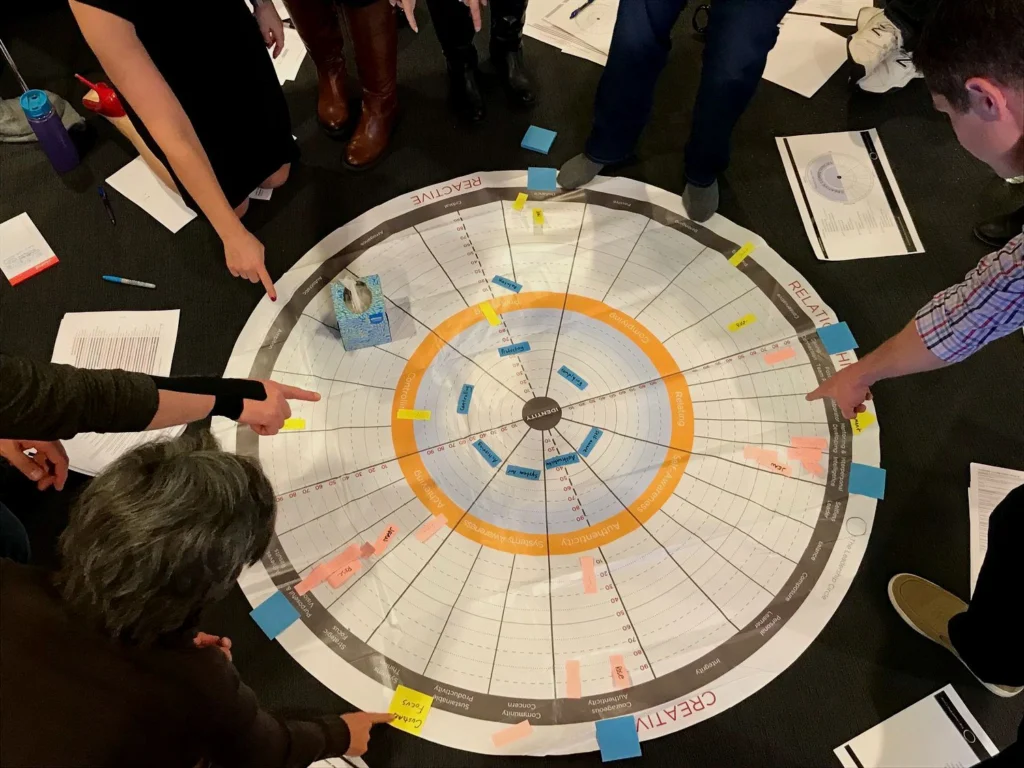
The Collective Leadership Assessment provides a clear answer to these questions. This online survey measures how employees perceive current leadership and how they would like to see it. The difference between the two is visible at a glance, clearly highlighting where the greatest opportunities lie.
The assessment utilises 31 dimensions of leadership effectiveness, based on the same proven framework as the Leadership Circle Profile. This ensures that individual and collective development complement each other seamlessly.
The survey is confidential and compared against a global database. This means you not only know where you stand, but also how your leadership team or organisation compares to others.
The CLA can be deployed for the leadership team or the entire organisation. The outcomes provide focus for leadership development and highlight cultural challenges, for example during mergers or reorganisations.
This makes it possible to work with the entire leadership team to develop the desired collective leadership style. The great thing about this is that it enhances their effectiveness within the team and fosters a shared language. This helps them to understand and support one another better, enabling them to grow and develop together and achieve better results.
Positive Intelligence® Programme with an app
The PQ® Programme from Positive Intelligence® is a simple and effective way to improve your wellbeing, performance and relationships. It is based on neuroscience, positive psychology and cognitive behavioural psychology.
This programme helps you break through persistent, self-sabotaging thought patterns. You build mental resilience through short, consistent daily exercises.
What does the PQ® Programme do?
- Catch your Saboteurs. Recognise negative mental patterns that undermine your wellbeing, relationships and performance.
- Activate your ‘Sage’ brain (your inner Sage). Activate that part of your brain that promotes clarity, resilience and creativity.
- Use your five ‘Sage’ Powers – Empathise, Explore, Innovate, Navigate and Activate – to overcome obstacles and realise your full potential.
Why choose this programme?
Noticeable results within the first 7 weeks, followed by consolidation
This programme does not merely address symptoms, but rather tackles the root causes of stress and negativity. The changes are consolidated in the months that follow.
What does the programme involve?
- Interactive learning — 1 hour per week for the first 7 weeks
Short videos and assignments with immediate practical application. - Morning Focus — 3 to 4 minutes a day
Exercises that deepen and personalise your understanding of mental fitness tools. - 10-second mini-exercises — anytime, anywhere
Micro-moments that reinforce positive habits. - Weekly individual or group training — half an hour to an hour per week for the first 7 weeks
To deepen learning, motivation and accountability. - The PQ App — 3 months to a full year’s access
Available for Apple, Android and desktop. It brings together your daily practice and tracks your progress towards lasting change. - Many applications — at your own pace throughout the year
Covering conflict management, stress management, productivity, relationships, leadership, resilience, wellbeing, parenting and more.
Testimonials
4 / 5
7 reviews
Marianne is a very pleasant and knowledgeable coach, with whom I feel very much at ease. I’ve been seeing her for a number of years now and am very satisfied with the way she coaches me. She connects well with who I am and with my questions, and she challenges me to reflect and take action. I’ve learnt a great deal from her over the past few years.
Judith Uiterwijk
After a hectic period at work where I was thoroughly criticised by a director, I lost my self-esteem. Thanks to Marianne’s support, I managed to get back on my feet and learnt to stand up for myself better. I was also inspired by an excellent leadership training course.
Marcel van den Eng
Marianne is a warm and empathetic coach who holds up a mirror to you in a positive way. With her, you feel safe and understood, even when confronted with deeper, often unconscious patterns. She guides you with care to become aware of these patterns and helps you let go of habits that aren’t working. Thanks to the full programme I completed with her, I have made noticeable and lasting progress in my mental health.
Frank de Jongh, doctor
I’m glad I chose Marianne and followed my intuition. I’m most grateful for her recommending the book *Positive Intelligence* by Shirzad Chamine. Inspired by this book, I started the online Mental Vitality Programme, and my coach, Marianne, guided me through it. I am also very satisfied with the way she helped me gain insight into my own strengths and qualities. I also really appreciated that Marianne took the initiative to check in with me from time to time to see how I was getting on and also drew my attention to practical matters.
C.E.
Thanks to our fruitful conversations, I soon realised that I’d taken on too much (both at work and in my personal life). It turned out I was suffering from burnout. Marianne was a great help to me during this difficult time. And the great thing is that Marianne is also very adept at adapting and can intuitively sense what is important and necessary at any given moment. Marianne has given me many insights on a number of points, which I find very valuable and which can bring me even closer to my goals in the future.
M.S.
Marianne’s team coaching has made a very positive contribution to team spirit. Team members are more aware of their communication patterns, and communication amongst the team has improved significantly. We now engage in much more dialogue with one another and are working constructively to improve our collaboration.
CK, Director
I’ve been seeing Marianne for years, and that really says it all. She has taught me to reflect: to pause where I used to rush straight through, and to look at situations through different eyes. In quiet periods, she gets me thinking; in challenging times, she brings calm.
What makes Marianne special is her combination of genuine commitment and professional expertise. She listens without judgement, asks exactly the right questions and provides practical tools that you can really put to use. Even between sessions, she continues to think alongside me and shows genuine empathy.
Over the years, I’ve developed thanks to our collaboration, both personally and professionally. I can wholeheartedly recommend Marianne to anyone who wants to grow further, reflect and take concrete action themselves. It’s simply a matter of taking a good, long look in the mirror with someone who guides you through the process with warmth and expertise!
Gert Kornet
“I’m so glad I found Marianne at a time when I really wasn’t doing well. I was incredibly tired, couldn’t think clearly any more and didn’t really know how to carry on. Things were very hectic at work and my private life was on autopilot. I just didn’t know what to do anymore. I confided in Marianne and she never betrayed that trust. She guided me in very small steps. At first, I really didn’t know the answers to her questions; my head was too full to think properly, but bit by bit, space opened up to consider how certain things needed to change. Both at work and in my own mind. Certain thoughts and habits have become so ingrained, yet sometimes they’re not good for you. Marianne confronted me with this and helped me realise it.
I really wanted to get ‘better’ again, so I took this programme very seriously – and it worked! Creating a new daily routine, dealing with thoughts differently, building in moments of calm, setting and maintaining boundaries, finding and drawing on my inner leader – I could list so many things that are now going so much better and bring me peace of mind. Now that I’ve had a chance to reflect on it, I realise just how much progress I’ve made, and I’m genuinely so happy about that! I’ve now completed my programme, but I know I can always turn to Marianne, and that’s a really lovely and reassuring feeling!
Melanie Clemens
I have taken part in many different self-empowerment courses, but I have never had such a life-changing experience as with Marianne!
I deliberately call it an experience as it goes far beyond coaching. The sessions include so much more than I had expected when I signed up for her coaching programme. With her enthusiasm, professional attitude and a sort of ‘superwoman’ radar, she always asks the right questions to establish clear goals for each session, no matter what area it relates to. She combines kindness with firmness in a remarkable way to achieve the best results, even without knowing in advance what those results will be or which direction to take.
Karin Oversloot-van der Zel
Coaching with Marianne van Oosterhout is not just an investment in yourself; it is also a gift to yourself. Sessions are always a combination of intensive work and moments of calm.
Intensive, because coaching with Marianne involves a – sometimes profound – confrontation with conscious and subconscious patterns and beliefs, exploring where they originate and how they influence you. It also involves hard work to internalise new patterns. This simply cannot be achieved without a bit of trial and error.
Finding peace, because Marianne creates an atmosphere in which you are allowed to be yourself, with all your quirks and struggles, and can focus on what you need at that specific moment to continue growing.
The reason this can coexist within coaching sessions is that Marianne combines thorough professionalism with a high degree of personal commitment, which extends beyond the sessions themselves.
Coaching with Marianne is therefore the most valuable gift you can give yourself.
JMG
Although I am a highly qualified coach and mentor myself, I have benefited greatly from Marianne’s intuitive and compassionate coaching and mentoring on a number of occasions over the past few years.
I have no hesitation in highly recommending Marianne for her insights, particularly in leadership and personal development. You’ll be glad you chose Marianne’s support.
Linda Ambrose

Organisation & Relationship System Coaching (ORSC)
Every group has its own dynamics, wisdom and strength, which are revealed and harnessed when coaching the system. The dynamics (group processes) within teams and organisations can significantly hinder the optimal functioning of, for example, teams.
Team coaching based on the ORSC methodology focuses on making visible and tangible what is happening within the team or organisation. This fosters awareness, enabling the team to decide collectively what they wish to work on in terms of collaboration, mutual trust and the growth of mutual respect.

Neurotransformational Coaching®
Broadly speaking, there are two types of energy that determine how a person feels: fear and love, light and dark, or light and heavy, and so on. A person’s level of effectiveness also depends on this. If someone feels hopeless or anxious, energy leaks away. We call this ‘below the line’. If someone is ‘above the line’ (courageous, engaged or driven), their effectiveness increases.
Example: ‘Goldilocks’ is out of balance
If someone is under too much stress (or, conversely, lacks sufficient stimulation), the prefrontal cortex (the part of the brain behind the forehead) does not function as well. The person lacks an overview, is unable to make sound decisions, displays impulsive behaviour, has a short temper, and so on. Effectiveness is low. I use a tool to help you become aware of this and to enable you to decide what you can do about it to significantly increase your effectiveness. This will help you control your impulses, make good choices and regain a clear overview.
These and other methodologies help you become more aware of where your energy lies and how you can increase your effectiveness.
Coaching is, by its very nature, a practical discipline focused on human development and has evolved through practice. Thanks to the tremendous growth of neuroscience and innovative research techniques such as functional MRI, we are learning more and more about what happens in the brain. We are learning what happens when someone is anxious or confident. And we are gaining an ever-better understanding of what occurs in the brain when we work with coaching tools and methodologies.

CliftonStrengths (Gallup)
CliftonStrengths®
Everyone has talents and strengths. But most people do not know exactly what they are. Traditionally, we focus on what needs improving, on shortcomings, on filling gaps. Whereas the real strength lies in utilising and investing in your talents. Because that is when a talent truly becomes a strength.
The CliftonStrengths® assessment identifies what naturally energises you and what you are good at, as well as the recurring patterns in the way you think, feel and act. No vague generalisations, but 34 specific talent themes.
Four domains
- Execution — you ensure that things actually get done.
- Influencing — you take the floor and inspire others to follow.
- Building relationships — you forge connections that make a team stronger than the sum of its parts.
- Strategic thinking — you quickly take in information and analyse it to make better decisions.
After completing the questionnaire, you will receive your unique ranking across all 34 themes. Your top five are your strongest talents. We focus on developing these first during coaching or training.
More than 30 million people worldwide have taken this assessment. A large proportion of Fortune 500 companies also use it. Because it works.
What are the benefits for you?
Insight into what drives you. The language to articulate your way of working to colleagues, your team or your manager. And a clear starting point from which to focus more consciously on what yields the greatest results, both for yourself and for those around you.
In my coaching, I use CliftonStrengths for both individual programmes and team coaching. You’ll discover what you have to offer. You’ll also learn to see how your talents complement those of others. That changes conversations. It changes collaboration.
Interested?
Book a no-obligation introductory meeting
Does any of this sound familiar to you? In a half-hour, no-obligation chat, we’ll explore together what’s going on and whether coaching is right for you. No sales pitch – just a straight-to-the-point question right from the start.